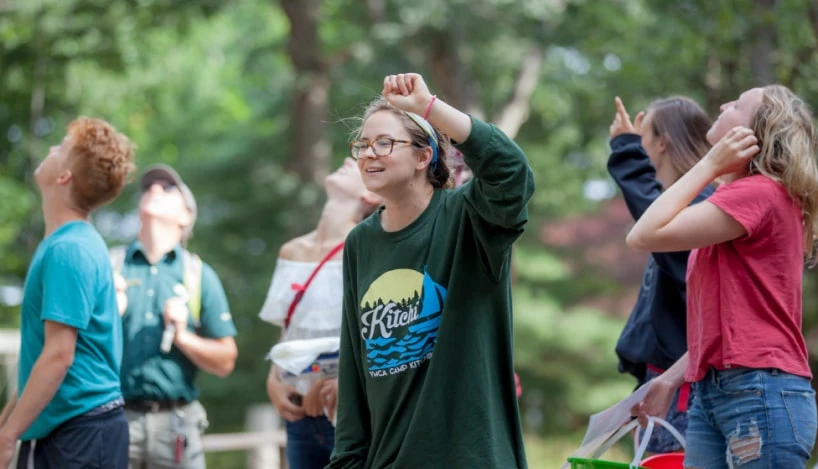
Health is more than just muscle tone. It is a dynamic and conscious growth of the entire self. At the Y, we believe that health and wellness go beyond physical fitness, and incorporates the entire body, mind, and spirit. Wellness is related to goals, decisions, and actions that contribute to a condition of optimal well-being so that you thrive rather than just survive.
Seven different aspects of wellness are considered to exist: physical, emotional, environmental, spiritual, social, occupational, and intellectual. These factors interact and have an impact on one another. The other dimensions of our well-being are impacted when one dimension is out of balance.
In order to achieve well-being, one must adopt a proactive mindset, learn how to be healthy in each dimension, and take steps to establish routines, habits, and coping mechanisms that promote wellness.
Read more about each dimension below, and how you can work towards a balanced well-being.
PHYSICAL WELLNESS
Physical wellness focuses on typical health and fitness activities, such as healthy eating, exercise, and other activities that support physical health. Physical well-being includes things like eating complete foods, exercising frequently, and developing healthy habits that will enable you to live a longer, happier life.
Strategies to enhance your physical wellness:
- Make exercise a regular part of your life by aiming for 150 minutes or more of moderate aerobic activity each week.
- Get enough rest (7-8 hours per night).
- Replace sports drinks and other sugar-filled beverages with water.
- Try to eat more wholesome, fresh foods, rather than processed foods.
EMOTIONAL WELLNESS
The ability to recognize and express emotions appropriately, including validating and managing emotions constructively, is at the center of emotional wellness. Positivity and being open about one’s feelings with a friend or trained expert might enhance emotional wellness.
Strategies to enhance your mental wellness:
- Practice mindfulness to acquire the mental condition of not dwelling on the past or the future, but instead keeping your consciousness on the now.
- Use self-care and relaxation techniques that are effective for you.
- Ask for assistance from your family, friends, the community, or a professional.
- Know who to contact in a crisis.
ENVIRONMENTAL WELLNESS
Your environment plays an important role in your well-being. Environmental wellness is how your environment positively affects your wellness. It can include connecting with nature, keeping your space organized, and reducing environmental hazards.
Strategies to enhance your environmental wellness:
- When you can, take advantage of the outdoors to engage in healthy physical activity, such as walking through parks or studying outside.
- Eat locally grown and produced food.
- Avoid exposure to environmental dangers like UV radiation, secondhand smoking, and excessive noise.
- Try to keep a tidy living environment.
SPIRITUAL WELLNESS
To achieve spiritual wellness, one must look for meaning and purpose in the every day, and seek values that help give direction to our lives. This can include practices like contemplation, prayer, and time spent in nature.
Strategies to enhance your spiritual wellness:
- Spending quality time with loved ones will help you develop your relationships with others.
- Connect with nature by taking a walk outside and focusing on your breathing.
- Spend some quiet time in meditation or reflection.
- Look into local faith based communities.
SOCIAL WELLNESS
Social wellness is how we interact with our community and those around us. Developing healthy relationships with friends and family and fostering harmony in these connections are key to social wellness. It includes consent, communication skills and support systems.
Strategies to enhance your social wellness:
- Look for opportunities, and be open to experiencing new things and meeting new people (e.g. join a club or organization, play a team sport, volunteer, etc.).
- To better comprehend different cultures and customs, pay attention to others and ask questions.
- Recognize the importance of consent in all facets of your social life, including interactions with peers, new friends, and romantic relationships.
- Participate in community service.
OCCUPATIONAL WELLNESS
Occupational wellness promotes job satisfaction while managing other obligations in one’s life. Getting work in a rewarding profession, or improving employment abilities through further education can contribute to occupational wellbeing.
Strategies to enhance your occupational wellness:
- Know how to strike a balance between work and play.
- Work according to your unique learning preferences.
- Feel inspired and challenged by your work, and appreciate the work you’ve done at the end of the day.
- Set goals, make a plan for achieving them, and then get to work on the plan.
INTELLECTUAL WELLNESS
The pursuit of new ideas, the development of existing abilities, and the application of novel approaches to problems are all encouraged by intellectual well-being. Continuous learning is key for this aspect of wellness as it challenges and grows intellect.
Strategies to enhance your vocational wellness:
- Obtain a range of experiences to broaden your knowledge.
- Learn which approaches are most effective for you and identify any areas where you require support.
- To focus on your interests and the kind of work you want to be doing, volunteer for new experiences.
- Do your best to avoid comparing your journey to others’ paths; they are all unique.
At the Y, we know the best prescription for wellness is belonging. More than a gym, pool, or a place for fitness, YMCA Members experience a sense of belonging, achievement, and friendship that is hard to find anywhere else.
Last month, the YMCA of Simcoe/Muskoka supported over 14,000 individuals in their health and wellness journey through our Health, Fitness & Aquatics programs. To learn more about how to start your journey with the Y, visit our website at www.ymcaofsimcoemuskoka.ca/membership/.
By Erin Beresford, General Manager, Wasaga Beach YMCA
Erin Beresford has worked at the YMCA for 20 years and is committed to building recreation programs in the Wasaga Beach community. Originally from Toronto, Erin and her family have made Wasaga Beach their home for the past 15 years.
You’ve seen some promotions about our recent annual report, Path to Recovery. In Wasaga Beach, I’m happy to report that the YMCA is well on its way to full recovery and feeling more like its old self. Our programming expansion is evidence of that.
Things have moved out of pandemic mode when avoiding COVID transmission was paramount. The focus is now on building back programming for children, youth and families… the fun stuff!
In Wasaga Beach, we’re jazzed to be offering child minding again every day — with no fee for members. This helps many families spend time at the Y with all family members doing whatever suits them best. The pool is increasingly a popular place for aquatics, lane swimmers, and families.
We’ve brought back programming for 3- to 5-year-olds with two “parent and tots” sessions – Stories & Games, or Stories & Songs. And my personal fav, Parent & Baby Yoga.
For the older kids, 3-on-3 basketball is back, with Y supervision included. The Youth Wellness course, which anyone under 13 must take in order to use the Wellness centre, is also back on the schedule.
As our capacity continues to build, we’ll be offering more, with a continued focus on youth programming.
You may have seen our ads to recruit lifeguards. Like all recreational facilities, perhaps like all organizations looking to hire, staffing can be a challenge these days. But we’re getting there! There will be bumps along the way, but the centre feels more like it once did.
For me, the pandemic has brought into focus the importance the YMCA plays in Wasaga Beach. As a charity, the YMCA provides access to recreational and fitness facilities for most everyone, making every membership dollar an investment in the Wasaga Beach community. That has always been and always will be the case.
I often hear members say they’re happy to have certain programs back. I love seeing programs return, too, but I’m even more grateful to hear kids laughing, youth hooting, and everyone else going about their fitness routines as we all do our thing under the YMCA roof.
To view program schedules for your local YMCA, visit our schedules page by clicking here.
Canada is largely regarded as one of the best and easiest countries to immigrate to. Canada is welcoming to immigrants and is ranked as one of the most livable places in the world. However, immigration in and of itself is no small feat. Many newcomers face immigration complications such as family and relationship issues, housing challenges, employment-related problems, and difficulties obtaining government services. At the YMCA of Simcoe/Muskoka, we strive to make this transition easier for newcomers by offering Immigration, Employment, and Learning Service supports.
This month we are highlighting one of the recent impact stories from our Employment Services Centre in Midland, written by Employment Specialist and Job Developer, Robert North:
In Employment Services, at our core we connect job seekers and local employers. Much of the time, it is routine and we go about our business quietly and good things happen. On occasion however, we have a great story to tell of obstacles overcome.
Irina, one of our job coaches here in Midland, had a client who recently came to Canada from Ukraine. We’ll call her Anna. Although Anna had a reasonable education, she had only the most rudimentary English and obviously, no Canadian work experience, which presented significant challenges. We had an existing relationship with a local retail store and through discussions with the owner, identified that they had an upcoming project where they could use a hand with resetting large portions of stock in their store. We identified that Anna may be able to help out, but would not be able to assist customers due to the language barrier. Irina went to the interview with the client to act as an interpreter and Anna was successful in being offered a position. The store owner agreed to allow her to work out of uniform in order to avoid any difficult customer interactions. The thought was, however, that Anna would still be exposed to English for long periods through the day and would be able to improve on her skills.
Within about six weeks, Anna had picked up enough English, and had grown enough in confidence, that she approached the store owner and asked for a uniform shirt so that she could be identified as part of the team and be able to assist customers. All indications are that Anna will continue with the employer. She is taking English classes, helping other new arrivals from Ukraine, and starting to write the next chapter of her life here in Canada.
Each year, YMCA Employment Services assists thousands of individuals to connect to meaningful employment opportunities. Our Employment Services centres located in Midland, Huntsville, and Parry Sound help individuals improve their job hiring skills and identify the jobs best suited to their skills and experience. Your job is out there, let us help you find it.
At the YMCA of Simcoe/Muskoka, we are committed to ensuring everyone in our community has access to services and supports that help them reach their full potential. If you, or someone you know, would benefit from Immigration or Employment services, please visit us at www.ymcaofsimcoemuskoka.ca.
By Ryan Purdy, Regional General Manager, YMCA Health, Fitness & Aquatics
Ryan Purdy is a reluctant exerciser facing down middle age and is the dad of two active kids. He has been working at the YMCA for over 17 years.
For a guy who works in YMCA Health, Fitness and Aquatics centres, you’d think the moment I decided it was time to take my health more seriously, all I had to do was step up to the starting line. But no.
As a father of two busy, active children, I’d come to a place where I knew I didn’t want, as the years pass, to have to say to my kids, “No, I’m tired. Maybe later.” I want the energy to keep up with them (okay, within reason). I want to maintain, even optimize, my health.
Despite my job, I’m no more naturally inclined to prioritize a weekly exercise routine, go for a hike, or evening walk. Throughout my adult life, I’ve jumped in and out of exercise in fits and starts that never turned into an exercise habit.
But this time, it’s going to be different because my motivation is different, and my approach is different.
Like many of us, my biggest challenge has been to get going. To not let myself make excuses.
This time, there are no fitness goals out of the gate. I’m not gunning to lose weight or inches. I’m not hoping to bench press 200 pounds next month. In my experience, lofty goals set too early in the program lead to discouragement at the first stumbling block.
This time, I want to set the foundation for long-term progress and lifetime health. My goal is to find exercises and routines that work for me. Find what I enjoy. I’m trying different movements and routines, checking out the variety of exercises with every piece of equipment. I’m learning what works for me, what I enjoy at this stage.
I’m one month into it now and have established a few practices to help me avoid the excuses. I’m learning. Forgetting I intended to do a workout today doesn’t happen. I book three, and only three, workout times in my calendar every week. Three evenings a week, I purposefully put my gym stuff out so I’m all set to go in the morning. No excuses, and not an overwhelming schedule. So far, so good.
Full disclosure. I also try to be somewhat mindful of what I eat. I’m eating somewhat less junk than I did before, but it’s not a diet. It’s one small step. All in good time.
For now, my focus is exercise and movement that is sustainable. Stay tuned.
If you’re looking to start or restart your fitness journey, like Ryan, the YMCA is here for you. We have plenty of fitness options that will help you every step of the way, from a variety of equipment on our conditioning floors, to personal training and group fitness classes, we’re here to help you meet your goals, no matter how big or small.
For a limited time only, until February 24, 2023, we’re waiving the Join Fee for new members! That’s a savings of $75! Visit our Online Portal to purchase a membership today, or check out your local YMCA Health, Fitness & Aquatics centre in Collingwood, Gravenhurst, Innisfil, Midland, or Wasaga Beach.
By Karen Pulla, Vice-President of Health, Wellness, and Community Impact
Karen Pulla is a mother of two who loves music, hikes with her 100lb German Shepherd, and team sports – playing her favourite, flag football, for the last 30+ years. Karen has enjoyed working for the YMCA for over 35 years, where every day, you see the impact of what makes a difference in our community.
There are any number of reasons why we strive for lifelong health and fitness. Sports and recreation programs give us the opportunity to improve our health physically, mentally, and socially while also building relationships through common activities and experiences. It helps us develop healthy lifestyles, and engage more fully in living. Sport and recreation build stronger, healthier, happier and safer communities.*
I recently came across an exciting new reason to exercise that tells me we need to mask up where needed and continue with our fitness routines. Exercise helps your COVID vaccine do its magic.
When it comes to COVID, I have always been a supporter of wearing a mask. It is the single most effective way to reduce the transmission of the virus, short of locking ourselves back into our homes – and few of us are considering that, even as cases rise. So I‘m masking up more than I did over the summer, at work and while out and about.
At the Y, as an employer, we encourage staff members to do the same. It’s their choice. Masks are also recommended for members popping in to work out at a Health, Fitness & Aquatics centre, or using other programs and services. Masks are the magic that can keep us healthy and help protect us from COVID as the winter months unfold. They are also the tool that can keep some of us working out if we’re concerned about virus transmission indoors. As I’ve said, it’s important to keep up with those workouts.
There is evidence that exercise can enhance the effects of vaccines or booster shots. That’s right! I recently came across an article in The New York Times, Exercise May Enhance the Effects of a Covid or Flu Shot, which talked about exercise directly following a vaccination or booster shot, and how exercise also provides “a potent boost to our immune systems” overall.
Longer-term studies are underway, but this winter, it’s hard to beat improved immune systems as a motivator to continue with a fitness program. If you are leery about visiting your recreation or fitness facility to work out as COVID cases rise, I suggest this… mask up and come in. You may have to back off on the intensity of your workout a bit if you’re wearing a mask, but research has proven that’s better than no workout at all! Your immune system will thank you, as it has with every other sweaty workout.
* See more in The National Benefits Hub, “Research that Supports Recreation” here.
There’s no better time to try the Y! From December 5-19, take part in the 12 Days of Fitness with a free 12-day trial pass. Visit your local YMCA Health, Fitness & Aquatics centre to get your pass today!
Many people think the only way to help their community or donate to their favourite charitable cause is with a financial donation – think again! While financial donations are integral to non-profits, there are many other ways that you and your family can give back, and make a difference in your community.
Here are five ways that you can make a difference, and support your favourite causes:
Give Your Time
The success of many charities depends on the work of volunteers. Donating your time is a great way to be more engaged with your charity of choice, and get first-hand experience helping others. To find out how you can contribute, visit the website of your favourite charity or search the Volunteer Centre. Numerous nonprofits are in need of office help, board members, volunteer drivers, special event volunteers, youth mentors, and more. There’s something for everyone!
If you are interested in volunteering at the YMCA of Simcoe/Muskoka please visit us at www.ymcasm.ca/volunteer.
Put Your Special Talents to Use
Consider your talents, interests, and hobbies before contacting a charity that can benefit from your assistance. What special skill can you offer? You could use your culinary abilities by participating in a community breakfast program, or help a local literacy program for children or immigrants by using your love of reading. Do you have a talent you can teach to others? People with artistic, writing, or computing abilities are frequently sought after by shelters, neighborhood initiatives, and several other charities to help better the lives of others. No skill is too small – a charity is undoubtedly looking for someone with the abilities you can provide.
Use Your Social Voice
Your voice is a powerful tool for social good. Help spread the word and talk about your favourite charity on social media. Inform your friends about their events and other ways they can get involved by sharing videos and stories about the fantastic work they are doing. You can also stick with the tried-and-true method of just telling others in-person about your favourite cause, and how they can support it.
Follow us on social media, and help us share the Y’s impact on the communities we serve!
Get Crafty for a Cause
Turn your passion for crafts into a labour of love. Knit or crochet toys, mittens, hats, blankets, and other items for a worthy cause. Donations of this kind can be made to clinics, shelters, long-term care homes, or other charities serving the underprivileged. Ask your neighborhood hospital or social services organization about giving the gift of warmth and comfort to the people they support. Your neighborhood craft store may be able to recommend a specific local charity as well.
Give Old Clothes or Toys a Second Life
Have your kids outgrown any of the items they used to love? Consider giving gently worn clothing or used toys a second life by donating them to a local nonprofit. Many shelters that support struggling families, refugees, immigrants, or homeless individuals rely on clothing and toy donations. These simple items that many of us take for granted can make a huge difference in a person’s life. For recommendations on where to donate, get in touch with a local faith-based organization, a social assistance agency, or shelter.
No matter how you decide to give back to your community, you can feel good knowing you’re making a positive difference in the lives of others.
Last year, the YMCA of Simcoe/Muskoka served over 20,000 individuals in our communities across Simcoe, Muskoka, and the District of Parry Sound. If you’d like to learn more about the ways you can give back to the YMCA, visit the ‘Options for Giving’ page on our website by clicking here. Your giving changes lives!
A new season is upon us, colours are emerging, and the local harvest is plentiful. These familiar milestones signal the beginning of fall and invite us to reflect on two important themes: gratitude and preparation. These cues from nature and the events, memes, and media coverage of Thanksgiving can help us understand why gratitude and planning ahead are synonymous with this time of year.
As they prepare for the colder weather, did you know squirrels store more food than they need? They are intelligent and meticulous when it comes to storing and relocating their bounty, but they often overlap with each other’s preserves. Any undiscovered stores return to the circle of life and provide nourishment to the surrounding ecosystems. As well as ensuring their own longevity, their efforts to accumulate nest eggs can also provide support to their “community,” whether they are aware of it or not.
Charity and not-for-profit work is deeply connected to these efforts of gratitude and preparation. There are dozens of charities in Simcoe Muskoka that serve the greater good throughout the year. Their tireless efforts address issues of inequality, provide basic needs, improve health, education, and connections, and bring people together. The success of this work depends on the support that is received through fundraising. Most often, community support is solicited by appeals to compassion or crisis, both of which are powerful tools to inspire generosity; however, both are very much focused on the problems to be solved. When someone is hurt or at risk, feelings of fear and worry bring about caring acts. Gratitude gifts are another story in giving back that is not discussed as often, one rooted in hope. The act of reflecting on one’s life and things they are grateful for can create a domino effect of goodwill, especially when paired with thoughtful and intentional giving.
The impact of planned gifts is often underestimated, yet they are among the most impactful. People are surprised to learn they are not only accessible to all income levels, but they are also mutually beneficial and, with the right advice, can be an integral part of personal financial planning. With the help of a lawyer or financial planner, an individual can establish a private foundation, set up a bequest or donor-advised fund, designate RRSPs or marketable securities, or use many other techniques to maximize their impact.
As squirrels do, most people work hard throughout their lives to set aside for their future, often unknowingly securing enough for themselves and their communities. During this time of preparation, we invite you to think about the legacy you wish to leave. During this season of gratitude, take a moment to think about who you are and what makes you who you are? In what ways am I grateful? How did I get here? Which organizations in the community are most important to me and how can I make sure they will be around for my children, neighbours, and generations to come? Talk about these stories with your family, lawyers, and advisors, and learn how you can use your own experience to make positive changes, for a brighter future.
Literacy is a foundational life skill, but did you know it also offers other benefits beyond comprehension and engagement with written texts? Developing literacy skills enables us to function in society, achieve our goals, and develop our abilities. It has been shown that adult literacy levels benefit not only individuals but also society in general.
Here are some of the ways literacy impacts our communities:
Better Employment Opportunities
Literacy levels and income are strongly correlated. People with lower literacy skills are more likely to be unemployed than those with higher literacy skills. In addition to reducing employment and promotion opportunities, low literacy skills can also present a health and safety risk at work. Increasing an individual’s literacy levels leads to the development of employable skills, higher wages, and increased job satisfaction. Supports that improve literacy skills not only benefit the individual, but also the economy, creating opportunities for innovation and economic growth. The research shows that for every dollar invested in literacy programs for adults, society receives $7.41 back.
Increased Community Involvement
Literacy levels can influence an individual’s involvement in social situations and community participation. Often those with lower literacy levels do not feel comfortable or confident in their social abilities and tend to shy away from participating in social events or getting involved in their communities. Participation in adult literacy programs is associated with increased participation in social events, community action, and national politics. It has been shown that literacy program participants reported an increase in community participation and were more likely than non-participants to register to vote. Increased literacy levels can create a greater sense of community, fostering social inclusion and acceptance.
Improved Personal Wellbeing
Literacy skills have a profound impact on personal and mental wellbeing. Many people with low literacy skills find it hard to do everyday things that others take for granted. Individuals with lower literacy skills are more likely to report poor health and be more socially isolated. Literacy also plays an important role in overall life satisfaction, with 78% of literate people reporting being satisfied with their lives, compared to only 50% of illiterate or lower literacy level people. Literacy affects more than an individual’s ability to read or write; it factors into everyday interactions with others and overall self-esteem. Increased literacy levels result in a stronger feeling of social inclusion, increased confidence, and enhanced relationships with others, leading to a fuller, happier life.
Did you know that 48% of Canadians have reading, writing and numeracy levels that fall below the levels deemed necessary for the demands of work and life in our country? The YMCA offers support to adults who may struggle with reading, writing, math, and computer skills through our free Learning Service community program. Our program provides an opportunity for adults to improve their skills and work towards independence, employment, or academic goals.
To find out more, visit https://ymcaofsimcoemuskoka.ca/learning-services/.
The experience of summer camp, whether it’s a day camp or an overnight camp, is incredibly impactful on a child’s life. It is often their first time away from home without family or friends. For young children, it can be a big step, but it allows them to grow and learn about themselves, while creating life-long memories.
Among the many benefits of summer camp, we’ve compiled a few to show how a camp experience can strengthen your child’s academic and societal skills:
Increased Independence and Social Skills
The summer camp experience gives children a chance to get to know a new community away from home and school. Children learn how to make decisions without their parents or guardians’ assistance at camp. It’s empowering and a great step towards independence. It gives them the chance to work together with new peers as well as adult mentors to manage conflict and build relationships.
Sparks Their Interest for Exploration and Adventure
Kids at summer camp have the opportunity to try many things they wouldn’t be able to do at home or at school. The kids can “try stuff on” to see what they like and what they don’t. There are those who enjoy arts and crafts, while there are others who would never leave the water. There are some who tend to perform/present in front of their peers, and there are others who concentrate on learning a new interpersonal skill such as sailing. A camp experience allows campers to discover specific interests and fine-tune them so that they return home eager to learn and explore more about them.
Helps Them Unplug
Screen time has increased threefold since the pandemic, and only 10% of children spend time outside daily on their own. For children aged 8-12 in North America, the average screen time is between 4-6 hours per day, and for teens, it is up to 9 hours. During summer camp, children can unplug and slow down, focus, and connect. Instead of spending time on social platforms, campers can try new activities, make friends, and connect through shared experiences.
Enhances Self-Confidence
Approximately 1,405 parents surveyed by the Canadian Summer Camp Research Project at the University of Waterloo reported that their children’s self-confidence and personal development had improved after summer camp. The parents described their children as more flexible, resourceful, and self-aware, which made them more capable of coping with life’s challenges. A greater degree of autonomy was demonstrated, more interest in trying new things was expressed, and more self-confidence was displayed when challenges were faced.
Encourages Self-Realization
At this age, campers have just begun to discover their identities as individuals. Camp encourages children’s interpersonal development in a way that few other experiences can. The camp staff recognizes individual traits within the campers and encourages them to express their unique qualities. We give leaders the chance to lead, thinkers the chance to analyze, and creators the chance to be creative!
Probably most importantly, summer camp brings kids together in an environment that is welcoming, safe, and makes them feel like they belong.
In our role as Canada’s largest camp provider, the YMCA empowers kids to live healthier, happier lives. To learn more about the YMCA of Simcoe/Muskoka day and overnight summer camps, please visit www.ymcaofsimcoemuskoka.ca/summer-day-camps/.
This Canada Day, the YMCA of Simcoe/Muskoka is reflecting on this moment in time, the state of our country, and the world. From the work to support refugees who continue to flee from countries like Ukraine and Afghanistan, to divisions around COVID-19 safety protections, and continued inequities in our society, it is clear that many challenges lie ahead of us. We have seen what is possible when we work together for a greater good, as we have throughout the COVID-19 pandemic. But we have also seen what happens when we ignore our collective responsibility to each other.
At the YMCA, we have always believed in the greater good, and even when things seem dark, we fiercely hold onto this belief as our guiding light. That together, we can be a place for people to connect, hear each other, and live up to our collective responsibility. That we can help people do more than participate —we can help them contribute. That when we do this, we build healthy communities.
We’re hopeful that the sentiment that everyone has the right to belong, thrive, and have their basic needs met will persevere. We recognize the harm to communities when that is not the dominant sentiment, and we hold no tolerance for harmful ideologies. We believe people can learn and transform and come to realize that everyone has the right to belong. This is the Canada We Want.
Last year on Canada Day, many called for the need for reflection and action on truth and reconciliation, as Indigenous communities mourned and grappled with the identification of Indigenous children’s remains at former residential school sites in British Columbia, Manitoba, and Saskatchewan. Also in 2021, Canada marked its first National Day for Truth and Reconciliation. Since last year’s Canada Day, more searches have begun and recoveries have been made across Turtle Island. As Indigenous communities expect the number of unmarked graves to continue to rise, today we are taking time to acknowledge the grief and outrage that is being felt through the ongoing recovery process, and to amplify calls for further progress on the TRC Calls to Action.
As one of Canada’s largest service charities, the YMCA has a vital role to play in furthering truth and reconciliation efforts within our organization and beyond. This is reflected by YMCA Canada’s Statement of Reconciliation , the 2020 report on Reconciliation Initiatives within the YMCA Associations of Canada, and the ongoing learning and dialogue events and workshops taking place for YMCA staff, volunteers, and members. We still have much work to do.
This Canada Day, we encourage all non-Indigenous Canadians to make time for unlearning, anti-colonial solidarity efforts, and truth and reconciliation actions that address the past harms and legacy of the residential school system. We express continued solidarity with Indigenous communities, including our Indigenous YMCA staff, volunteers, and members.
We remain hopeful that through the strength of caring, collaboration, and community, we can move closer to achieving the Canada We Want.